
Constipation
What Is Constipation?
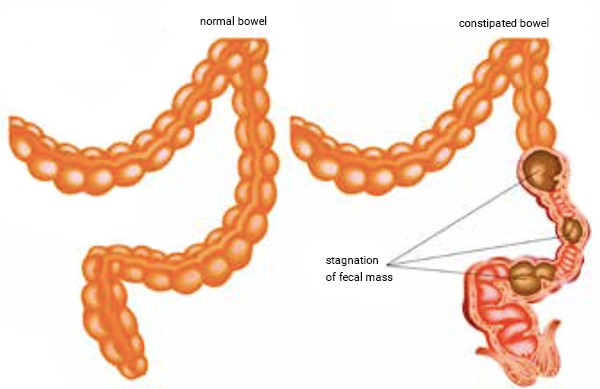
Constipation is a very common condition that affects people of all ages. It means you are not passing stools (faeces) as often as you normally do, you have to strain more than usual or you are unable to completely empty your bowels.
Constipation can also cause your stools to be unusually hard, lumpy, large or small. It can be either acute or chronic and many people only experience problems for a short period of time with no lasting effects on their health.
Constipation symptoms and signs
You are likely be constipated if you are experiencing any of the following:
- Fewer bowel movements than normal
- Pain and straining when passing stools
- Stomach pain
- Stools are hard and dry, and may be large or small in size like pellets
- Sore bottom
- Unpleasant smell due to passing wind
- Leaking of liquid or loose stools
- Your bowels open less than three times a week
- There may be a bad taste in the mouth, bad breath, abdominal bloating, decreased appetite, lethargy and, for some, the inability to function normally.
Causes of Constipation
There are many triggers that can cause constipation and associated symptoms which can include:
- Diet – not enough high fibre foods
- Pregnancy
- Lack of fluids
- Slow Transit Colon
- Lack of exercise
- Some medicines, especially pain killers
- Some people with neurological problems such as Parkinson’s disease or Multiple Sclerosis are prone to constipation
- Surgery around the anus can sometimes be a cause of constipation mainly due to pain when emptying the bowel afterwards
- Conditions such as Irritable Bowel Syndrome (IBS), Colitis and Crohns Disease
- Ignoring the urge to open the bowels
- There is a strong connection between emotional feelings and how the gut works. Feeling upset can make your bowel slow down or speed up.
How to Prevent Constipation
There are various things you can do to help keep your bowels healthy and avoid becoming constipated. If you are in any doubt, consult your GP or Healthcare Professional before making significant changes to your regular diet. A dietitian will also be able to guide you.
- As a general rule, eating more high-fibre foods can prevent constipation. However, if constipation is a result of Colitis or Crohns disease, increasing fibre intake could have a detrimental effect
- There are two different types of fibre; soluble and insoluble. Soluble fibre dissolves in the intestines to form a gel type substance. This helps food move along the digestive tract. Insoluble fibre is not dissolvable and moves through the intestines without being absorbed. This fibre adds bulk to bowel movements and helps to reduce constipation
- Make sure you drink lots of fluids to keep the stools moist e.g. at least 1.5-2 litres ( 6-8 glasses) of water based drinks per day
- If you are taking any medicines (prescribed or bought from the chemist) ask your doctor or chemist if they could be adding to your constipation. If possible, try to remove constipating medications
- If really necessary, try using a fibre supplement such as fybogel and possibly suppositories or mini-enemas to help regularise the bowels, but they should not be used long term. Some foods can act as natural laxative for some people, these include; prunes, figs, liquorice, coffee/tea, spicy food
- If possible, increase your physical activity as this helps to increase bowel activity
What is normal?
The normal defecation rate for an adult is between three bowel movements per day to three bowel movements per week. If you are going less than three times a week and are experiencing pain, discomfort and straining on passing a motion, you are probably constipated.
To help gauge how long the stool has spent in the bowel you can use a scale called the Bristol Stool Form Scale. To check if you are sitting correctly on the toilet take a look at our toilet positions guide.
When to seek help
Most people get constipated from time to time and can treat it themselves by making small changes to their diet. However, if you have constipation that doesn’t go away, you might need medical treatment to get your bowel habits back to normal.
At the Doctors
In order to diagnose your constipation, your doctor will ask you how long your symptoms have been present and if you have any rectal pain or bleeding.
It may help to fill in a Bowel Diary for one or two weeks before your appointment. The doctor will also ask you for information on your toilet habits, diet and general health and may need to examine you.
Remember that medicines such as painkillers and iron supplements can cause constipation, so the doctor will review the medicines prescribed for you and will ask you if you take any other medicines you have bought yourself.
All of this information will help your doctor find out what might be causing your constipation, and if necessary refer you for further colonic investigations.
Further Help for Constipation
You will find further information about causes and how it’s diagnosed on our Constipation information sheet.
If you are concerned about your problem and it is starting to affect your day to day life make an appointment to see your doctor, continence nurse or specialist physiotherapist. A continence nurse and specialist physiotherapist are healthcare professionals who specialise in bladder and bowel problems.