
Home About Us Bladder Bowel Resources Support Us News and Events E-learning Contact Sitemap
Healthy Bowel Bowel Problems Treatments Products Info and Advice

TV Campaign

Loading the player ...

B&BF Corporate Supporters

Bladder and Bowel Foundation
Fundraising Standards Board

Accessibility:

A A A

Print this page

Print this page

Email this page

Email this page

Bookmark

Bookmark this page
Top Border - Bladder and Bowel Foundation

Bowel > Bowel Problems

Bowel Problems

The first and most important point to remember is that everyone with a bowel problem can be helped and many can be completely cured.

If you have been diagnosed with bowel (faecal) incontinence, IBS, Colitis, Crohns, constipation or other bowel problems you can search the drop down menus below to find out more information about your specific condition or problem. If you have not been diagnosed by a health professional, the following questions about your symptoms should help you find the information you are looking for.

Do you find it difficult to have a bowel movement or have a bowel movement less than 3 times a week and have to strain excessively or do not feel completely empty? You may be constipated.

Do you pass watery or very loose stools more than 3 times in a day? You may have diarrhoea.

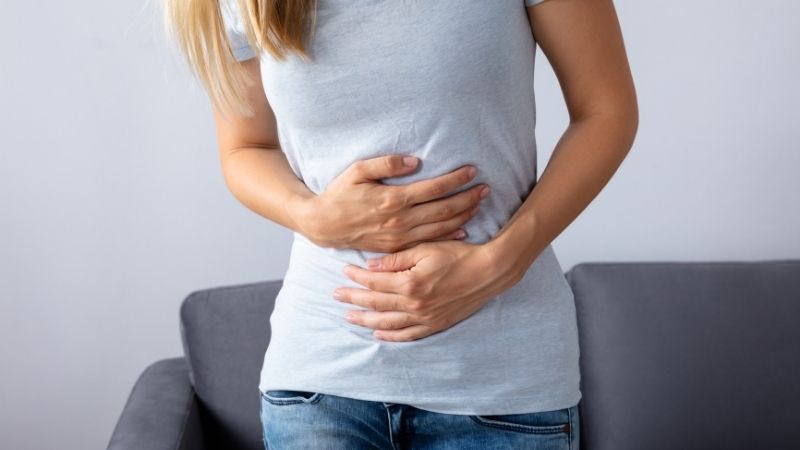
Do you have abdominal pain (in the lower left part of the abdomen) and a change in bowel habits (constipation or diarrhoea or alternating between both), with a mild fever and nausea and vomitting? These are symptoms of diverticular disease.

If you have diarrhoea, weight loss and abdominal pain, these could be signs of Crohn's Disease.

Do you have bloody diarrhoea or diarrhoea containing mucus and the constant urge to go to the toilet even though nothing comes out, with or without abdominal pain? These are symptoms of Ulcerative Colitis.

Do you leak faeces without being aware of it? This could be bowel or faecal incontinence.

For more information, please choose the appropriate condition or symptom from the drop down menus below.

Once you have a clearer idea of what your problem may be or if you have been diagnosed you can visit our treatment and product sections to see what your options are for managing your symptoms or condition. Information dealing with the more practical and emotional side of coping with bladder problems can be found by visiting the Info and Advice section.

All the information provided by B&BF is intended as a general guide only and should not be treated as a substitute for the medical advice of your own GP or any other health professional. We therefore recommend that you make an appointment with your GP or other health professional for a medical assessment and diagnosis.

Getting help for your bowel problems

It is never too late to get help with your bowel problems. If your problem affects the quality of your day-to-day life, (for example; by making it hard for you to travel freely, making it necessary for you to identify every accessible toilet around the area you want to visit in town, making social occasions difficult to attend, getting in the way of your work, and so on), you should certainly seek help. Generally your first contact should be your GP; but it is possible to consult your local continence advisor without referral. Please visit the Continence Clinic Database facility within our Specialist Services section or call our general enquiries line on 01536 533255 for help.

Colonoscopy - a flexible fibreoptic tube is passed through the back passage into the colon and the health professional performing the test can then look at the lining of the bowel and check if it is healthy.

Barium Enema - a paste is inserted into the back passage and an x-ray is taken. The barium helps to show up any problems.

Anorectal Physiology Tests (for faecal incontinence) these are a combination of tests which measure how the anal sphincter muscles work by assessing the muscles and nerves. The pressure inside the back passage will also be measured using a narrow catheter or tube.

Anal Ultrasound (for faecal incontinence) - a probe is inserted into the anus which provides ultrasound pictures to check if there is any damage to the muscles.

Internal examination - the doctor / continence advisor puts their fingers into the back passage to check for any abnormalities. For men, this can also detect if the prostate gland is enlarged.

Further Help and Advice

If you would prefer to talk this through in confidence with a specialist continence nurse before you make an appointment with your GP or continence clinic, please phone our Helpline on 0845 345 0165.

B&BF's Helpline is totally confidential, please visit our Helpline page if you would like more information on this service.

You can also obtain the Radar key which is part of the National Key Scheme. This key offers disabled people independent access to locked public toilets around the country. Toilets fitted with National Key Scheme (NKS) locks can now be found in shopping centres, pubs, cafes, department stores, bus and train stations and many other locations in most parts of the country. Please click here to be directed to the Radar website for more information.

Last updated: 22/12/2011

Bottom Border - Bladder and Bowel Foundation

Bowel

Bladder and Bowel Foundation

Bowel Conditions and Symptoms

Bladder and Bowel Foundation

Associated Conditions that can lead to bowel problems

Make a Difference

our work is totally dependant on donations

The information contained within this website has been provided as a general guide and should not be treated as a substitute for the medical advice of your own GP or any other health professional.

B&BF is a registered charity no. 1085095 and a company limited by guarantee no. 4125585. Company Registered at SATRA, Rockingham Road, Kettering, Northants, NN16 9JH

© 2011 The Bladder & Bowel Foundation. All rights reserved.    

Web Design in Northamptonshire by BlueBox Media